
Southwest monsoon, critical for the farm-based economy of the country, is expected to reach Kerala on May 30, two days before its normal onset date in the coastal state.
Sowing of winter rice and oilseeds has started along with the progress of the monsoon over India's southern and northeastern regions, the agriculture ministry said on Thursday.\n\n\n\n
The Southwest monsoon, crucial for agriculture across the country, has entered a weak phase and is expected to revive in the next two days. The weathermen have forecast strong westerly winds over the peninsular region, which is expected to aid the advance of monsoon in the next two days. Monsoon is expected to reach Mumbai by June 10.
'The monsoon has stabilised over Kerala. It is no longer temporary,' Dr S K Subramanian of the Indian Meteorological Department said.

The IMD chief also allayed fears of occurrence of an El-Nino.

The exercise, Agriculture Minister Radha Mohan Singh said, will help ease any possible impact of sub-par rainfall on farmers.

Ahead of the seven-phase Lok Sabha elections, keeping food prices under check has emerged as one of the topmost priorities for the government. Food prices would likely have a bearing on the preferences of voters. In the past, there have been instances when governments have been voted out over rising food inflation.
The southwest monsoon has picked up pace, and is now on the verge of covering almost the entire country.
The monsoon is expected to reach Delhi around June 29, which is the normal date, but the national capital has already recorded 91mm rainfall, which is more than the normal of 55mm for June.
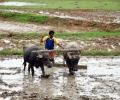
Any long dry spell could cause moisture stress in the standing crop during the crucial maturing stage and also make it prone to pest and disease attacks.

High vegetable prices are expected to keep food inflation firm in the months to come.

The IMD said that there has been an increase in the rainfall activity in Kerala and monsoon could hit the state anytime now.

Despite admitting to price pressures both from food items and input prices, RBI Governor Shaktikanta Das on Wednesday hoped that a normal Southwest monsoon will have a "soothing impact" on inflation pressures and ruled out any wide variations in medium-term inflation forecast from what was given in April. In an unscheduled address earlier in the day amidst the raging pandemic, Das said the overall outlook for the economy is highly uncertain and is clouded with downside risks. He offered a slew of relief and liquidity measures to individuals and small businesses apart from a Rs 50,000 crore special liquidity window to the healthcare sector.

The southwest monsoon is expected to reach Kerala during the next two to three days, marking a sluggish start to the seasonal rains that are the lifeline of India's agri-based economy.

Several global models are predicting El Nio to appear around the second half of the year, which are the crucial rain-bearing months.

Assocham-Skymet report says untimely rain may reappear in north India.

With different agencies showing divergent predictions regarding the southwest monsoon, the central government and states are gearing up to face adversity with various line ministries reportedly being directed to undertake mock drills and hold preparatory meetings. Around 56 per cent of the net cultivable area of the country is rain-fed, accounting for 44 per cent of foodgrain production. The June-September rains contribute around 73 per cent of the annual precipitation.

The national capital has been witnessing an incessant spell of light to moderate rain for the past two days.

India recorded 125 extremely heavy rainfall events during September and October of 2021, the highest in five years, owing to late withdrawal of the southwest monsoon and higher-than-normal low-pressure systems, India Meteorological Department (IMD) said on Tuesday.

G P Sharma, President (Meteorology) of the Skymet Weather said the Long Period Average of the rainfall during June to September will be 103 per cent with an error margin of plus or minus 5 per cent.

In Uttar Pradesh, the death toll due to lightning strikes rose to 42.

The IMD had said the Southwest Monsoon would hit parts of north India including Delhi on July 10, but it had not occurred till Sunday evening.

Rains have been 5% below normal so far, but Met department sticks to its forecast

East and northeast India recorded 29 per cent rain deficit -- 141.5 mm against the normal of 199.9 mm -- from March 1 to May 3.

According to the Central Water Commission, of the 91 major reservoirs in the country, 62 water bodies reported 80 per cent or below of normal storage.

Reports said that in Telangana and Karnataka, excessive rains the past 10 days has threatened the standing green gram and maize crops and could negatively impact yields if the skies don't open up. But in the north-west and central parts of India, the resurgence of monsoon could not have come at a better time as oilseeds and pulses crops would otherwise had weathered if the rains didn't revive in August.

The rainfall in July was minus seven per cent which comes to around 93 per cent of the Long Period Average, IMD Director General Mrutyunjay Mohapatra said.

However, the areas under paddy - the biggest cereal grown during the kharif season - continue to be less than last year, mainly due to delayed onset of rains and also on account of shift towards the more lucrative maize.

June 1 is the official onset date of monsoon in India when it hits Kerala.

Skymet is credited with correctly predicting the 2009 drought.

States have been told to prepare in advance to counter any impact of an adverse southwest monsoon.

Intermittent, widespread rains lashed Chennai and other regions of Tamil Nadu on Tuesday and the India meteorological department said the low pressure area over the Bay of Bengal has turned into a well-marked low pressure area and it is likely to become a depression.

India received 41 per cent more rainfall than normal from October 1-21 with Uttarakhand alone recording more than five times its normal precipitation, IMD data showed on Thursday.

The slowdown in sowing is mainly because of the delayed onset of the southwest monsoon and its slow progress in June.

The current coal stock stands at 13.5 million tonnes at pithead power stations and 20.7 MT cumulatively at all power plants across the country.

Drought fears will subside if the momentum generated is maintained in August.
The southwest monsoon in 2012 might have left Indian shores a couple of months back after having a rather uneven run during the four-month season, but its after-effect in pushing up prices of onion , edible oils , pulses , potatoes and banana is likely to be felt all year long.

Skymet said September would be much better and it expects it to end at 111 per cent of the LPA

A normal monsoon will augur well for the country's agriculture sector and boost crop yields. However, good rains - and surplus crops - could also depress prices, hurting farm income, unless adequate steps are taken.
 © 2026 Rediff.com - Advertise with us - Disclaimer - Privacy Policy - Sitemap - Feedback - About us - Terms of use - Grievances